Sourced seafood with a story
This restaurant or market participates in a sourcing path where the seafood can be connected to a waterman, fish house, region, harvest route, or specific working-water origin.
Death Fish Storied SeafoodAlways ask where the seafood came from
A visible designation for restaurants and seafood markets that choose to serve seafood with its source, harvest story, and working-water connection still attached.
What it means
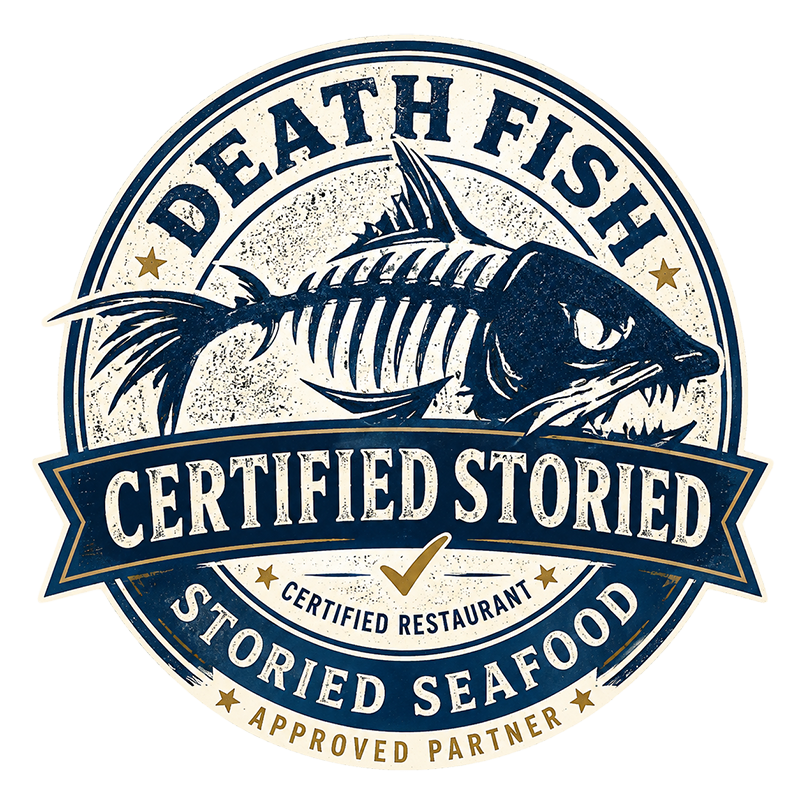
Certified Storied Seafood is not a generic “local seafood” label. It is a Death Fish Storied Seafood recognition for restaurants, seafood markets, and buyers that are willing to keep the story of the seafood visible after it leaves the dock.
To carry the designation, the seafood must be connected to useful source details whenever available: the waterman, vessel, fish house, harvest region, landing route, species, season, or gear that brought it to market.
For the customer, the designation says the restaurant did more than buy seafood. It chose to preserve the connection between the plate, the water, and the people who worked for that harvest.
Look for this designation of Certified Storied in a restaurant or market to know the seafood was sourced with care and connected to a real working-water story.
What it takes
Certified Storied Seafood is built around practical actions a restaurant or market takes without making the menu complicated.
This restaurant or market participates in a sourcing path where the seafood can be connected to a waterman, fish house, region, harvest route, or specific working-water origin.
These useful details are preserved whenever they are available: species, harvest area, season, landing date, gear, vessel, captain, crew, or the fish house that handled the product.
A menu note, table tent, market card, counter sign, QR code, staff talking point, or feature board helping customers see where the seafood came from.
The designation is only presented and displayed at restaurants or markets that can reasonably explain the story behind the seafood being featured.
Why it matters
A species name tells the you what you are eating. A story tells you why it matters.
Customers can understand that the fish, crab, oyster, clam, or shellfish in front of them came from a real river, bay, sound, dock, boat, and working-water community.
This designation shows a restaurant and market stands apart by showing that seafood was chosen with purpose, not treated as an anonymous commodity.
Working watermen carry the risk, gear, cost, weather, timing, and local knowledge behind every harvest. Certified Storied Seafood helps keep that labor connected to the final consumers plate.
What this designation says about the restaurant and market
Displaying a Certified Storied designation on seafood tells customers that the restaurant and market values source, season, working watermen, and honest seafood conversations.
This restaurant/market recognizes that seafood begins before the kitchen -with boats, docks, gear, weather, tides, and working watermen.
Instead of stopping at “fresh” or “local,” staff points customers toward a region, waterman, QR story, or harvest route.
The purchase helps keep value moving through docks, fish houses, waterfront towns, markets, and restaurants connected to the water.
This seal encourages customers to ask where the seafood came from and rewards restaurants markets that are ready to answer.
At the point of purchase
Certified Storied Seafood is meant to be seen where seafood decisions happen: on a menu, table tent, market case, feature board, counter card, or printed QR piece.
You dont need to become a seafood expert. The designation of a restaurant or market simply gives a way to see that the seafood was sourced with care and connected to a real working-water story.
Display the wording
Displayed by restaurants, fish markets, seafood counters, and buyers so customers to know more than the species name.
What may be documented
Not every harvest story includes every field, but Certified Storied Seafood is designed to preserve the most useful details available.
Source details can include:
Tell the Customer the story
Important note: Certified Storied Seafood is a Death Fish Storied Seafood provenance and recognition designation. It is not a government seafood inspection, organic certification, legal grade, or substitute for required seafood handling, licensing, reporting, or regulatory compliance.
Why restaurants care
For a restaurants, Certified Storied Seafood is a menu feature, a server conversation, a QR-code table piece, and a reason for a customer to come back. It shows that this restaurant values quality, transparency, and the working people behind the harvest.
Bring the story to the counter
Death Fish Storied Seafood exists to make provenance visible. Certified Storied Seafood gives restaurants, markets, and buyers a practical way to stand with working watermen, strengthen customer trust, and make the story part of the purchase.