Gateway community
Cape Charles helps connect the Eastern Shore to the wider Chesapeake and coastal seafood story, with working waterfront character close to both Bay and Atlantic influence.
Death Fish Storied SeafoodAlways ask where the seafood came from
If you arrived at this page from a QR code link Your seafood came from these Virginia’s coastal side areas. Where Eastern Shore harbors, seaside bays, Atlantic inlets, and working boats give shellfish and finfish a distinct coastal identity.
Regional overview
Coastal Virginia seafood reaches beyond the inner Chesapeake Bay into seaside creeks, marshes, barrier-island waters, and Atlantic-facing harbors. When seafood from this region reaches a restaurant or market, it carries the work of small coastal communities where commercial harvest is still part of the local economy.
Map the waters
Fishing grounds
Cape Charles helps connect the Eastern Shore to the wider Chesapeake and coastal seafood story, with working waterfront character close to both Bay and Atlantic influence.
Wachapreague represents the kind of small coastal harbor where seafood still feels close to boats, tides, marshes, and the people doing the work.
Chincoteague is a recognizable coastal community that helps customers connect a familiar place with the working-water harvest behind the seafood.
These bays and inlets give Coastal Virginia its distinct seafood identity — saltier, open, seasonal, and closely tied to weather windows and local knowledge.
Species with a place
Clams and oysters from Coastal Virginia carry a strong sense of place because shellfish reflect the waters where they grow and the communities that work those grounds.
Blue crab links the coast and the Chesapeake together. It is familiar on the table, but stronger when you know the water and the working community behind it.
Flounder and mixed inshore finfish show that Coastal Virginia is more than one product. The region supports a changing harvest shaped by season, tide, and weather.
Familiar species become more meaningful when they are tied to a real stretch of coast, a working harbor, and a waterman who made the trip.
Working watermen
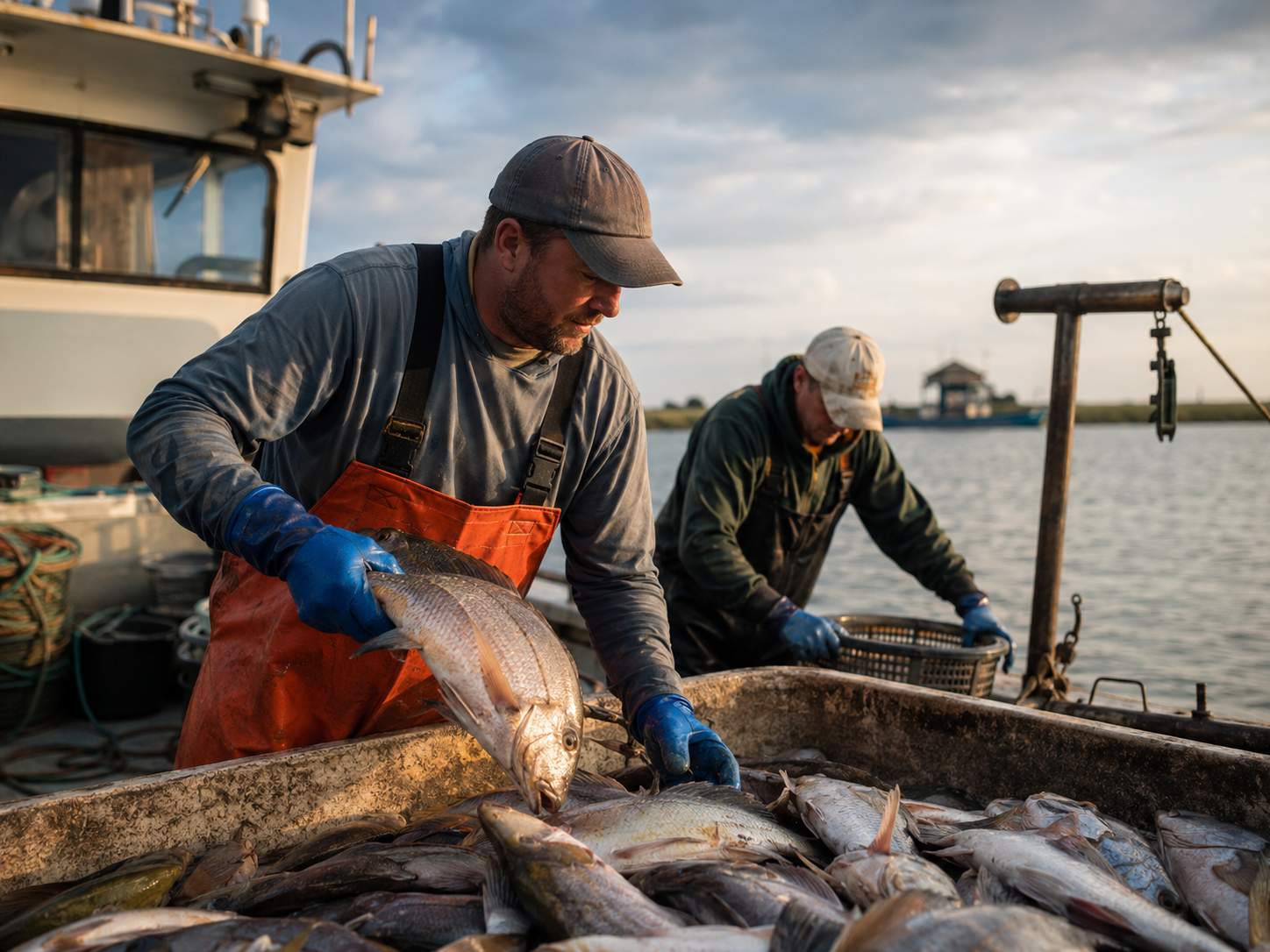
Every harvest depends on people who know the coastal waters well enough to work safely and responsibly. Their boats, gear, skill, and local knowledge help keep small coastal economies alive and help keep the story of these waters visible.
Carry the coast with the meal
When you enjoy seafood from Coastal Virginia, you are also tasting the work of small coastal communities. Visit these hidden coastal towns, ask where your seafood came from, and help keep the working-water story alive.