Marsh-country commercial identity
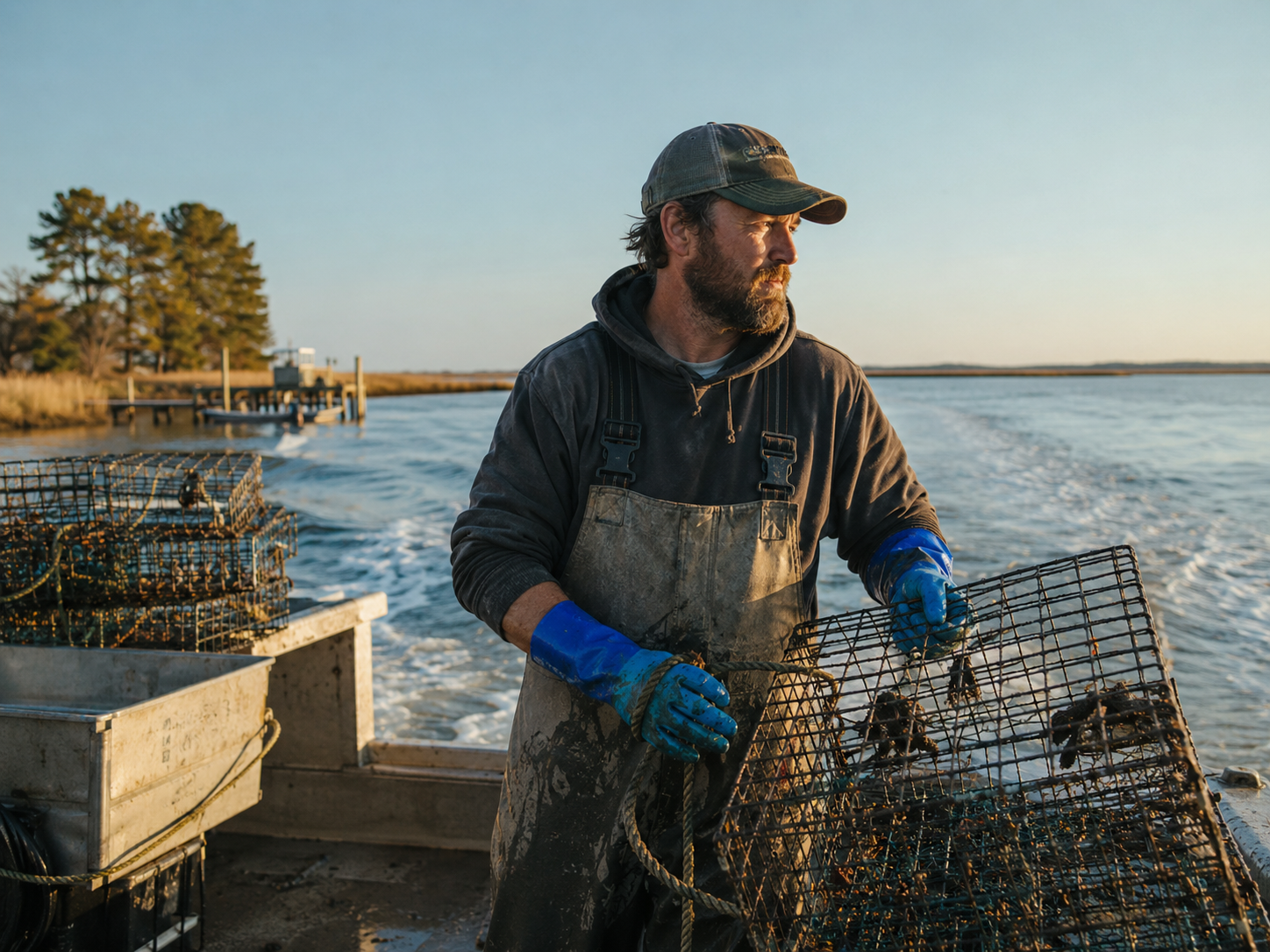
Poquoson is a strong anchor for the lower Chesapeake story, where commercial fishing remains part of local identity, family history, and the coastal economy.
Death Fish Storied SeafoodAlways ask where the seafood came from
If you arrived at this page from a QR code link Your seafood came from the salty lower Chesapeake. A place of marsh creeks, crab pots, oyster work, clams, small boats, and Poquoson’s deep working-water identity.
Regional overview
The Lower Chesapeake Bay and Poquoson region feels different from inland river country. It is saltier, wider, and shaped by marshes, creeks, oyster grounds, clam areas, crab routes, and generations of commercial watermen who help keep these coastal communities working.
Map the waters
Working waters
Poquoson is a strong anchor for the lower Chesapeake story, where commercial fishing remains part of local identity, family history, and the coastal economy.
Back River helps show the tidal, marsh-linked environment that shapes what is harvested and when watermen can work.
The lower York connects river influence with open-Bay harvest grounds, giving seafood from this area a broader Chesapeake identity.
Hampton Roads connects small-boat harvests and working waterfronts to a larger seafood market while still holding onto a specific lower-Bay story.
Species with a place
Blue crab is one of the clearest tastes of this region. It connects the table to marshes, pots, workboats, and watermen who understand the movement of the lower Bay.
Oysters and clams from lower-Bay waters carry the influence of salt, tide, bottom, and the working grounds where they were harvested.
Croaker, spot, and flounder show the range of the lower-Bay fishery and the seasonal variety that small-scale watermen bring to market.
Well-known finfish mean more when they are paired with a named lower-Bay origin and the people behind the harvest.
Working watermen
The seafood from this region depends on watermen who invest in boats, gear, time, and local knowledge. Their work supports docks, markets, restaurants, families, and small coastal towns where the water is still part of daily life.
Carry the lower-Bay story with the meal
When you enjoy seafood from the Lower Chesapeake Bay and Poquoson, you are tasting more than a species. You are supporting working watermen, hidden coastal communities, and the waterways that shape them.