River-town seafood culture
Urbanna helps place this seafood in a recognizable river-town setting where seafood culture and community identity are closely tied.
Death Fish Storied SeafoodAlways ask where the seafood came from
If you arrived at this page from a QR code link Your seafood came from these Virginia’s Middle Peninsula and Mobjack Bay waters. A region of small working waterfronts, oyster and crab culture, river mouths, creeks, and Bay waters where seafood still stays close to the people behind it.
Regional overview
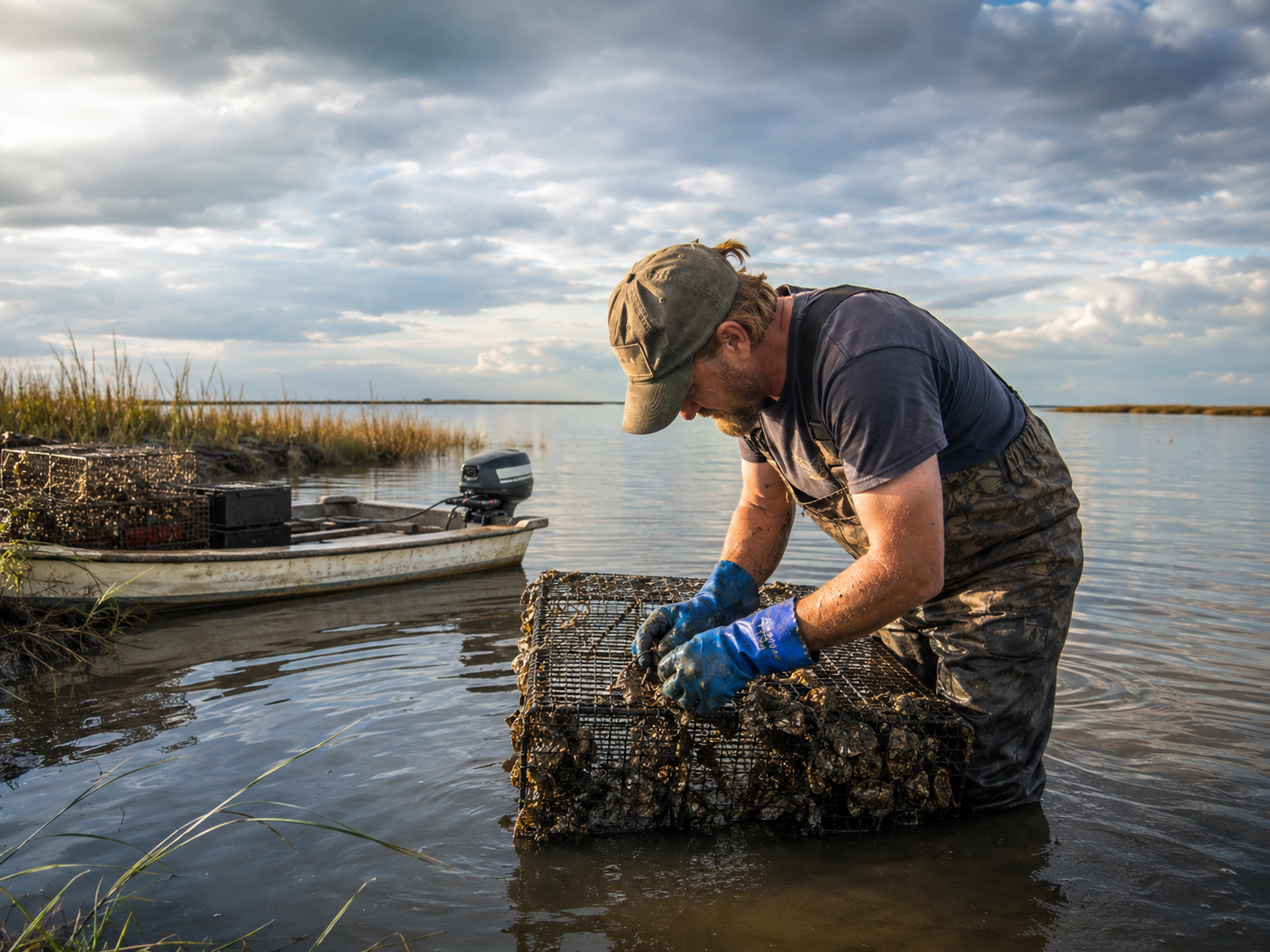
The Middle Peninsula and Mobjack Bay region sits between river country and lower-Bay water. Its seafood carries the identity of small towns, creek mouths, oyster grounds, crab pots, and watermen whose work supports local docks, restaurants, markets, and families.
Map the waters
Fishing grounds
Urbanna helps place this seafood in a recognizable river-town setting where seafood culture and community identity are closely tied.
Deltaville gives the region a strong working-water connection, with access to bayside work, boat culture, and seafood movement.
Mobjack Bay gives the region its strongest water identity, tying together multiple communities, harvest styles, and seafood stories.
Mathews and Gloucester keep the story grounded in visible waterfront communities rather than anonymous seafood supply.
Species with a place
Blue crab ties this region to marsh edges, workboats, sheds, and the practical Chesapeake food culture many customers already love.
Oysters and clams give this region a strong sense of place while staying rooted in real working waters and small waterfront communities.
Croaker, spot, and perch show the fuller working-water picture beyond the most famous Chesapeake names.
Well-known finfish help connect this region to the larger Chesapeake seafood conversation while still keeping the source specific.
Working watermen
The working watermen of this region help support small coastal economies while preserving the living knowledge of tides, weather, bottom, season, gear, and responsible harvest. Their work keeps local seafood visible and keeps these waterfront communities tied to the Bay.
Keep the Bay story visible
When you enjoy seafood from the Middle Peninsula and Mobjack Bay, you are tasting a working landscape. Visit these small coastal towns, ask where the seafood came from, and help keep the watermen’s role visible.