Tappahannock reach
Tappahannock gives the Rappahannock seafood story a recognizable upriver anchor and a real town customers can picture.
Death Fish Storied SeafoodAlways ask where the seafood came from
If you arrived at this page from a QR code link Your seafood came from these Rappahannock River and Northern Neck waters. A historic Virginia seafood region where oysters, crabs, finfish, working docks, and river communities give the harvest a clear sense of place.
Regional overview
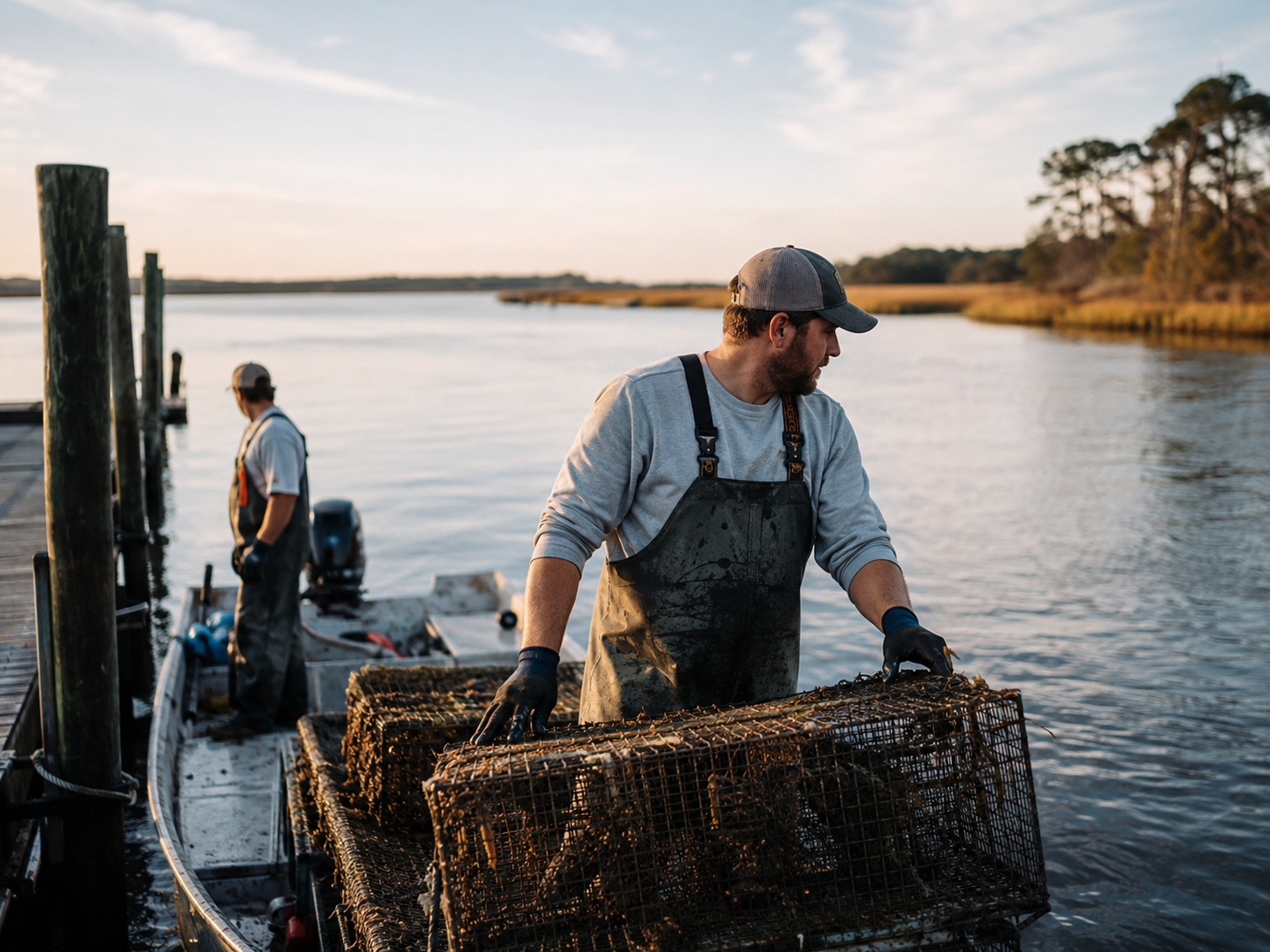
The Rappahannock name already means something to many seafood lovers. It suggests river oysters, working docks, crabs, finfish, and small towns where the local economy is still tied to the water. When seafood carries this region name, it connects your meal to a real river system and the people who work it.
Map the waters
Fishing grounds
Tappahannock gives the Rappahannock seafood story a recognizable upriver anchor and a real town customers can picture.
Warsaw and nearby creeks help show how inland river communities remain connected to commercial seafood harvests.
Kinsale and the lower-river transition carry the feel of working docks, crab sheds, oyster grounds, and seafood moving from river country toward the Bay.
The river mouth connects Rappahannock harvest identity with the broader Chesapeake, giving seafood from this area both river and Bay character.
Species with a place
Oysters are one of the clearest ways to taste the Rappahannock story because shellfish reflect the waters where they grow.
Blue crab connects the Rappahannock to nearby Bay communities, working docks, and the practical seafood economy of the region.
Striped bass and perch give customers familiar fish with a clear river identity.
Croaker, spot, and catfish round out the real working-water picture and show that seafood supply follows season, water, and weather.
Working watermen
The watermen of the Rappahannock and Northern Neck support more than seafood supply. Their boats, gear, skill, and daily decisions help sustain small waterfront economies and keep local knowledge of the river alive.
Carry the river name forward
When you enjoy seafood from the Rappahannock River and Northern Neck, take the story with you. Visit these river towns, ask where the seafood came from, and help keep working watermen part of the conversation.