Tappahannock
Tappahannock gives the seafood story a specific, memorable place name grounded in a real river town.
Death Fish Storied SeafoodAlways ask where the seafood came from
If you arrived at this page from a QR code link, Your seafood came from these Tappahannock and upper-mid Rappahannock rivers. A river-town setting where oysters, crabs, finfish, docks, and working-water knowledge give the harvest a clear place.
Regional anchor town
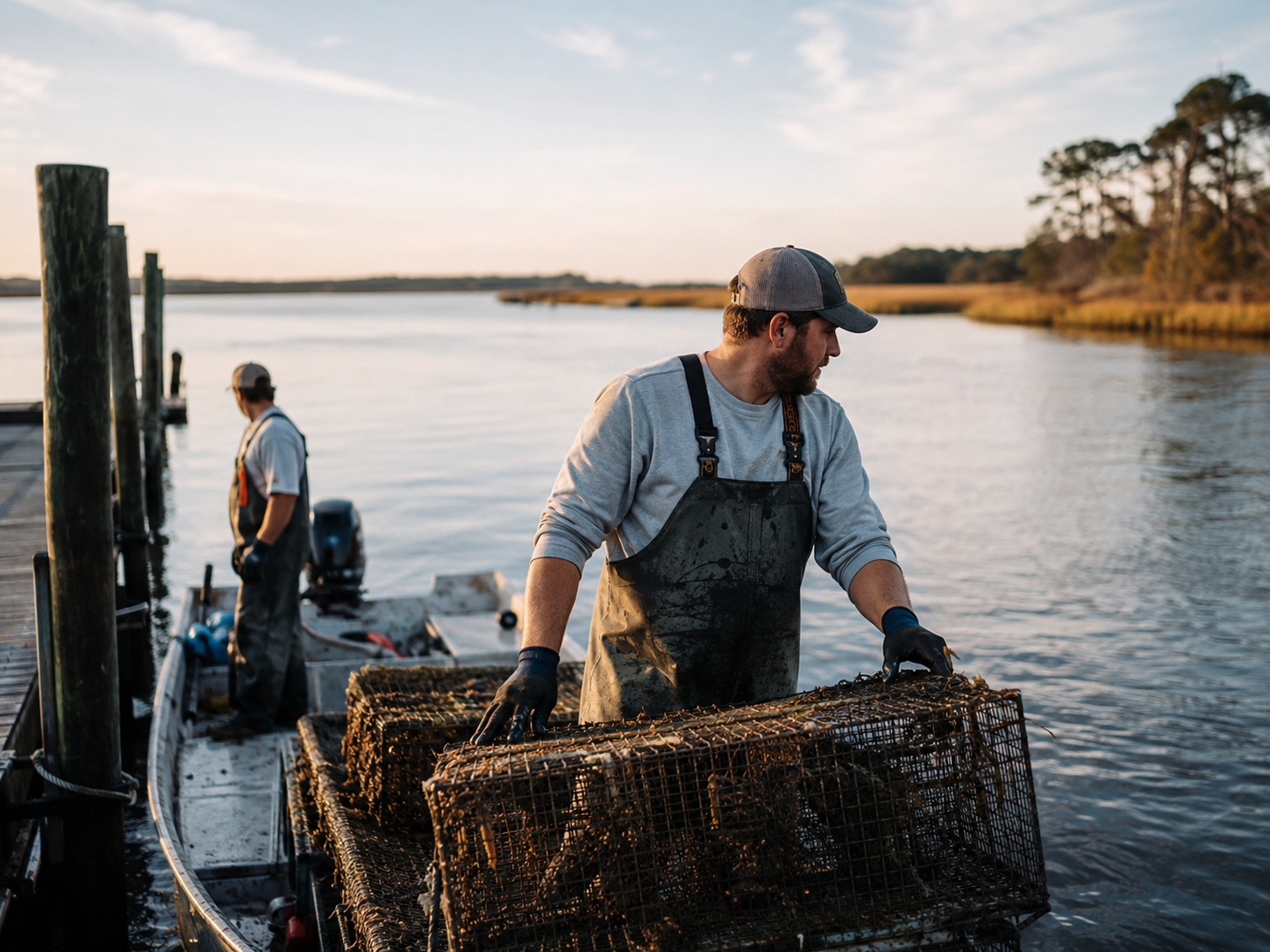
Tappahannock helps turn a broad river name into a place you can picture. When seafood is tied to this part of the Rappahannock, the story becomes more personal: a river town, nearby creeks, docks, boats, and watermen working a living Chesapeake tributary.
Map the river town
How this place shapes the story
Tappahannock gives the seafood story a specific, memorable place name grounded in a real river town.
The upper-mid Rappahannock helps separate this upriver character from the lower river and Northern Neck mouth-to-Bay story.
This region works well for QR stories because it gives customers an easy place to understand: Tappahannock, the Rappahannock River, and the watermen who work nearby.
As featured watermen are added, this page can connect your meal to specific people, harvest notes, and nearby working waters.
Species with a place
Oysters are one of the strongest ways to taste the Rappahannock name because shellfish carry the character of the water where they grow.
Blue crab connects Tappahannock to the practical working-water picture: docks, pots, sheds, and the route from river to buyer.
Striped bass, perch, and catfish help make the Rappahannock more than an oyster story and show the fuller fishery picture.
Croaker, spot, and bait fish help explain that the river story changes with season, water, movement, and market demand.
Working watermen
The watermen working this river reach help support small river communities, local seafood markets, and restaurants that want to serve seafood with a real source. Their knowledge of season, gear, weather, and water keeps the Rappahannock story alive.
Carry the question forward
When the answer includes a river town like Tappahannock, you get more than a product. You get place, water, work, and story — and a good reason to visit these hidden river communities yourself.